
"2500 KRW coffee"
146000 article(s) found

The producing countries of high-quality coffee beans introduce the types of coffee beans
Blue Mountains-named after mountains, native to Jamaica in the West Indies, grown between 1000 and 2500 meters above sea level. Features: large particles, good quality, taste blending, sweet, sour, bitter three natural balance and fragrance, is recognized as the world's best coffee.

What are the Ethiopian G1 micro-batch series? Flavor characteristics?
Professional coffee knowledge exchange more coffee bean information please follow the coffee workshop (Wechat official account cafe_style) Ethiopia Cochel G1 washed Ethopia Kochere G1 Hama Washed ■ country: Ethiopia ■ production area: Cochell, Hama ■ altitude: 1600m-2500m ■ treatment: washed ■ level: G1 ■ varieties: native species

Dominica Coffee Flavor description, characteristics of Grinding, introduction to Fine Coffee
The earliest coffee in Dominica was introduced from Martinique (the overseas province of France), dating back to the early 18th century. Dominica is an island country with a tropical climate. The temperature changes little throughout the year. Except for the lower temperature in the Central Cordillera Mountains, which can reach less than 0 ℃ in winter, the annual average temperature in other areas is between 25 and 30 ℃, which is affected by the mountain topography.
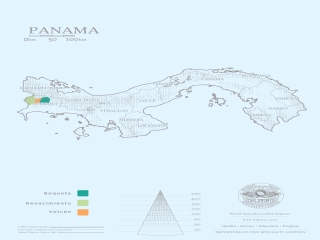
Grading of Panamanian coffee beans-an introduction to the grading system of Panamanian and Costa Rican coffee beans.
Generally speaking, the price of Panamanian coffee belongs to the low and medium price, but its performance in the cup is often as good as that of any famous or even expensive coffee producing area. The price of Panamanian specialty coffee is among the highest in the international market, after the Europeans first brought the first tin trucks to Panama in 1780.

Introduction to Bolivian Coffee Manor, producing area of Alpine country Coffee
This is the description of Bolivian coffee; Bolivia, located on the southeast side of Peru, is. La Paz (capital) is 3660 meters above sea level. Coffee cannot be grown in such a cold place. But YUNGAS, northeast of La Paz, borders the Amazon basin. The altitude is a little lower. About 1500-2500 meters. The average annual temperature is about 10-15 degrees without frost damage in winter. The fertile soil is characteristic of the main coffee producing areas in Bolivia. America

Introduction to Bolivian Coffee Manor, producing area, characteristics and Flavor
Takesi Manor in the Mururata mountains of Sud Yungas, about 100km from the capital La Paz, can only be reached by the Inca ancient road. Here, it is still a branch of the Andes, and the manor belongs to the Agrotakesi SA institution. The whole farm has about 2500 hectares, about 1900 to 3000 meters above sea level. Takesi, which grows coffee, is as high as 2100 meters above sea level, which should be a rare high sea.

Brief introduction of Costa Rican Coffee Bean grading system recommendation of flavor characteristics of Costa Rican Mozart coffee beans
Professional coffee knowledge exchange more coffee bean information please follow the coffee workshop (Wechat official account cafe_style) front street-Costa Rican classification, chocolate flavor introduction Costa Rican coffee has always been regarded as the perfect type of classic flavor, balanced, clean, mild is its tone, has always been extremely flavor

Coffee growing habits Coffee trees belong to the Akanaceae evergreen family
Coffee trees belong to the evergreen family of the Akanaceae family. They are tropical plants and are not cold-resistant. Most of them are planted in areas with an elevation of 300-400 meters. There are also highlands cultivated at elevations of 2000-2500 meters. However, the quality of those planted on slopes above 1500 meters is better. Coffee trees grow best at an average temperature of about 20 degrees Celsius and annual precipitation of 1500-2000 millimeters

Kocher Single Bean Farm Information Flavor Description Characteristics Origin Information
Professional barista communication please pay attention to coffee workshop (Weixin Official Accounts cafe_style ) Ethiopia Kochere Washed GOLOLCHA G1 ■ Country: Ethiopia ■ Production area: Kochere, Goolocha ■ Elevation: 1800m-2000m ■ Processing method: Washing ■ Grade: G1 ■ Variety: Native species ■ Wind

What are the suggestions for baking beans in Cochell Manor?
Professional barista communication please follow the coffee workshop (Wechat official account cafe_style) Ethiopia Cochel washed fruit G1 Ethiopia Kochere Washed GOLOLCHA G1 ■ country: Ethiopia ■ producing area: Cochel, Godocha ■ altitude: 1800m-2000m ■ treatment: washed ■ grade: G1 ■ variety: native species ■

Introduction to the Blood Manor of the Coffee producing country of Bolivia
In boutique coffee, this is the description of Bolivian coffee; Bolivia, located on the southeast side of Peru, is an alpine country. La Paz (capital) is 3660 meters above sea level. Coffee cannot be grown in such a cold place. But YUNGAS, northeast of La Paz, borders the Amazon basin. The altitude is a little lower. About 1500-2500 meters. The average annual temperature is about 10-15 degrees without frost damage in winter. The fertile soil is Bolivia.

History and culture of Colombian coffee the development of Colombian coffee
In the early 1960s, coffee production was about 600kg per hectare. Now it has risen to about 900kg, and some farms can reach 2500 kg. However, quality assurance is a top priority for the coffee industry. Colombia established the National Coffee Management Association (Federacion Nacional de Cafeteros, or FNC) in 1927, which is responsible for quality supervision. Although the association is a private company

Introduction of Bolivian coffee producing areas with excellent coffee varieties
Arabica coffee cannot be grown in cold places above 2000 meters above sea level. if the altitude is too high, coffee trees will frost because the temperature is too low. So Bolivian coffee is mainly grown in the Yungas region northeast of La Paz. It borders the Amazon basin and is about 1500-2500 meters above sea level with an average annual temperature of about 10-15 ℃. Therefore, it ensures the growth of coffee.

High quality and sour Bolivian coffee beans introduce boutique coffee
Arabica coffee cannot be grown in cold places above 2000 meters above sea level. if the altitude is too high, coffee trees will frost because the temperature is too low. So Bolivian coffee is mainly grown in the Yungas region northeast of La Paz. It borders the Amazon basin and is about 1500-2500 meters above sea level with an average annual temperature of about 10-15 ℃. Therefore, it ensures the growth of coffee.

Flavor characteristics of G1 grade producing area of Ethiopian boutique coffee sun-dried Feiziao
Professional coffee knowledge exchange more coffee bean information please follow coffee workshop (Wechat official account cafe_style) Arabica coffee is a gift from Ethiopia to the world, they are hidden in the primeval forest, naturally grow, have a long history, the country of origin of coffee is Ethiopia. More than 2500 kinds. So far, Ethiopia still has a lot of wild forest coffee, some

Treatment of coffee beans in manors in Bolivian coffee bean producing areas
This is the description of Bolivian coffee; Bolivia, located on the southeast side of Peru, is an alpine country. La Paz (capital) is 3660 meters above sea level. Coffee cannot be grown in such a cold place. But YUNGAS, northeast of La Paz, borders the Amazon basin. The altitude is a little lower. About 1500-2500 meters. The average annual temperature is about 10-15 degrees without frost damage in winter. Fertile soil is a special feature of the main coffee producing areas in Bolivia.

Kochel single bean coffee bean manor information flavor description characteristics origin information
For professional baristas, please follow the coffee workshop (Wechat official account cafe_style) Ethiopia Cochel washed fruit G1 Ethiopia Kochere Washed GOLOLCHA G1 ■ country: Ethiopia ■ producing area: Cochel, Godocha ■ altitude: 1800m-2000m ■ treatment: washed ■ grade: G1 ■ variety: original species ■ wind

Introduction to the category and flavor of Kenyan coffee
● Santos NO2, Brazil (Brazilian Santos NO2) is soft, gentle and unique, with a smooth taste, originating from one of the largest coffee producers in the world. Moderate acidity, rich and body, mild, unique and smooth flavor. If it is adzuki bean (17-18 / 64 inch), the adult bean is more beautiful, compared to the taste of soybean grain (19/64FCS)

Introduction of coffee planting mode, variety and planting area in Tanzania
Coffee species therefore, so far, coffee in Tanzania is also dominated by bourbon and Kent. Coffee varieties Arabica 70% planted between 1000-2500 m Robsta 30% planted between 800m-900m outline and classification of Tanzanian coffee beans North: 1 and 2 harvest season: July-December west: 3 and 4 harvest season: may-

Overview of Tanzania beans and three major planting areas
When Pangu came out, in 1898, bourbon coffee was introduced by Catholic priests to the Kilimanjaro region of Tanzania. Then the Kent species was introduced in 1920. Coffee species therefore, so far, coffee in Tanzania is also dominated by bourbon and Kent. 70% of the coffee variety Arabica is grown between 1000 and 2500 meters.